

By Lainie Mayfield, Founder of VozClinic · Cross-Border Operations series, part 2
A man in Phoenix has spent three months putting off two implants that cost as much as a used car in his city. Tonight he finally made up his mind. It’s 11 PM, the kids are asleep, and he messages the three Tijuana clinics on his list over WhatsApp. Two will answer him tomorrow. One answers now. Guess whose chair he ends up in.
Last week this series laid out its thesis: response speed is medical tourism infrastructure, as real as the port of entry. This installment goes to the first concrete pain point, the biggest and least measured one: the contact that arrives while the clinic is closed.
The nighttime demand is real, even if you never see it
More than 70 percent of medical tourism patients in Mexico come from the United States, according to the cluster’s own data. That patient has a job, a family, and insurance that doesn’t stretch far enough, and his moment to research is when the day finally goes quiet: between 8 PM and midnight, and on weekends. His message lands in a front desk that closed hours earlier, and there it goes cold. He doesn’t complain, doesn’t insist, doesn’t wait. He writes to the next clinic on his list, and in this region there is always a next clinic.
The treacherous part is that this leak shows up in no report. The 10 PM missed call generates no complaint and no survey, because that patient never became a patient. The clinic only sees the ones who did arrive, and concludes its funnel works.
Measure before you believe
Don’t take my word for it. Audit your own clinic; it costs two weeks and zero pesos. Export the call logs from both of your numbers and your WhatsApp history, and classify every first contact by hour of arrival. At the end you’ll have three numbers that probably nobody in your clinic knows today: how many new contacts arrive between 7 PM and 8 AM or on weekends, how long each one waited for its first real response (a response that moves things forward, not a “we’ll get back to you”), and what percentage of those contacts ended in an appointment compared with the ones that arrived in daylight.
In most clinics that have run this exercise, the after-hours volume surprises people, the first-response time is measured in hours, and that segment’s conversion is a fraction of the daytime rate. The distance between what arrives and what converts is money the clinic already paid to attract, with its reputation and its marketing, and quietly gives away every night.
The usual band-aids
There are three fixes everyone has tried. The auto-reply promising attention “during office hours” acknowledges without advancing anything, and the patient keeps looking. The doctor’s or coordinator’s personal cell works for two weeks, until personal life presents the bill and the midnight messages go back to waiting. And hiring a bilingual night desk costs what an extra payroll costs, to cover volume that arrives in unpredictable spikes. None of the three is bad faith. All three lose to arithmetic.
The mechanism: a front desk that doesn’t sleep
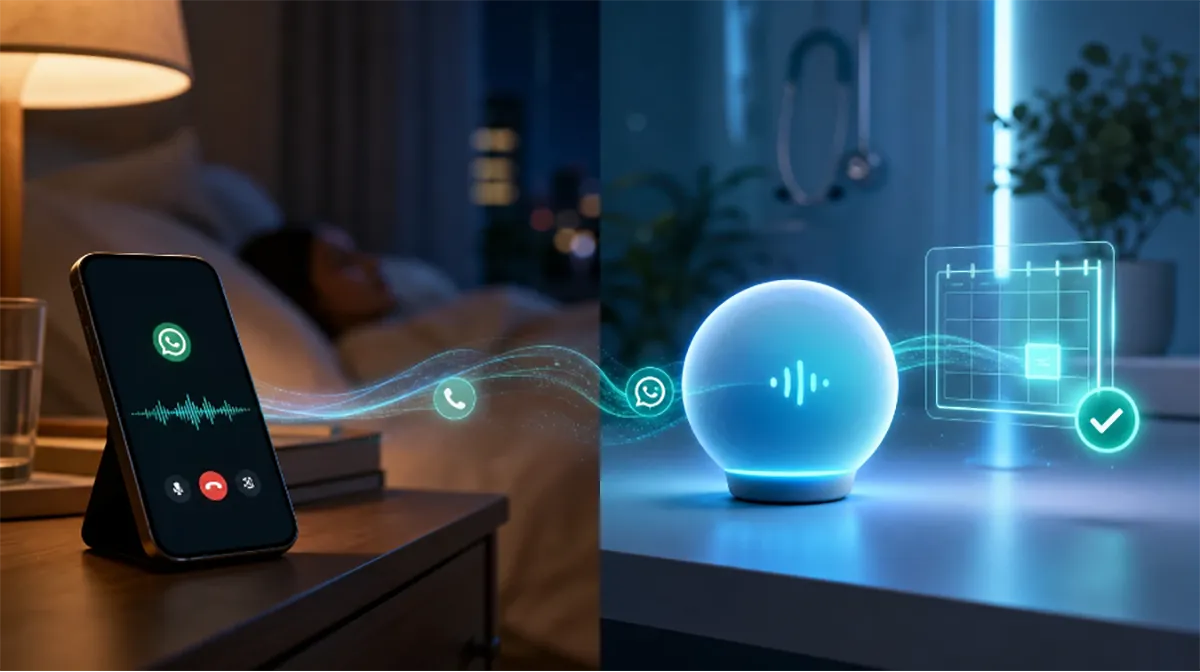
This is where technology comes in, and it deserves to be described as a mechanism, not as magic. A bilingual AI front desk, like the one we build at VozClinic here in Tijuana, answers both of the clinic’s numbers in seconds at any hour, holds the conversation in Spanish or English following the patient, responds with the clinic’s own information, books directly into its calendar, and sends the reminders. And it has limits by design: it doesn’t diagnose, doesn’t quote firm prices on complex treatment plans, and escalates to a human whatever needs a human, with every conversation logged and auditable under the LFPDPPP.
The point of this installment isn’t that particular tool. It’s that the 11 PM message now has an operational solution, and the clinics in this region that solve it first will harvest demand that is currently going cold in dark inboxes.
Next week: the midday leak, when the front desk is open and calls get lost anyway.
Lainie Mayfield is the founder of VozClinic, a bilingual AI front desk for cross-border clinics, built in Tijuana. lainiem@vozclinic.com · vozclinic.com